Blaming Foreign Powers for Your Problems
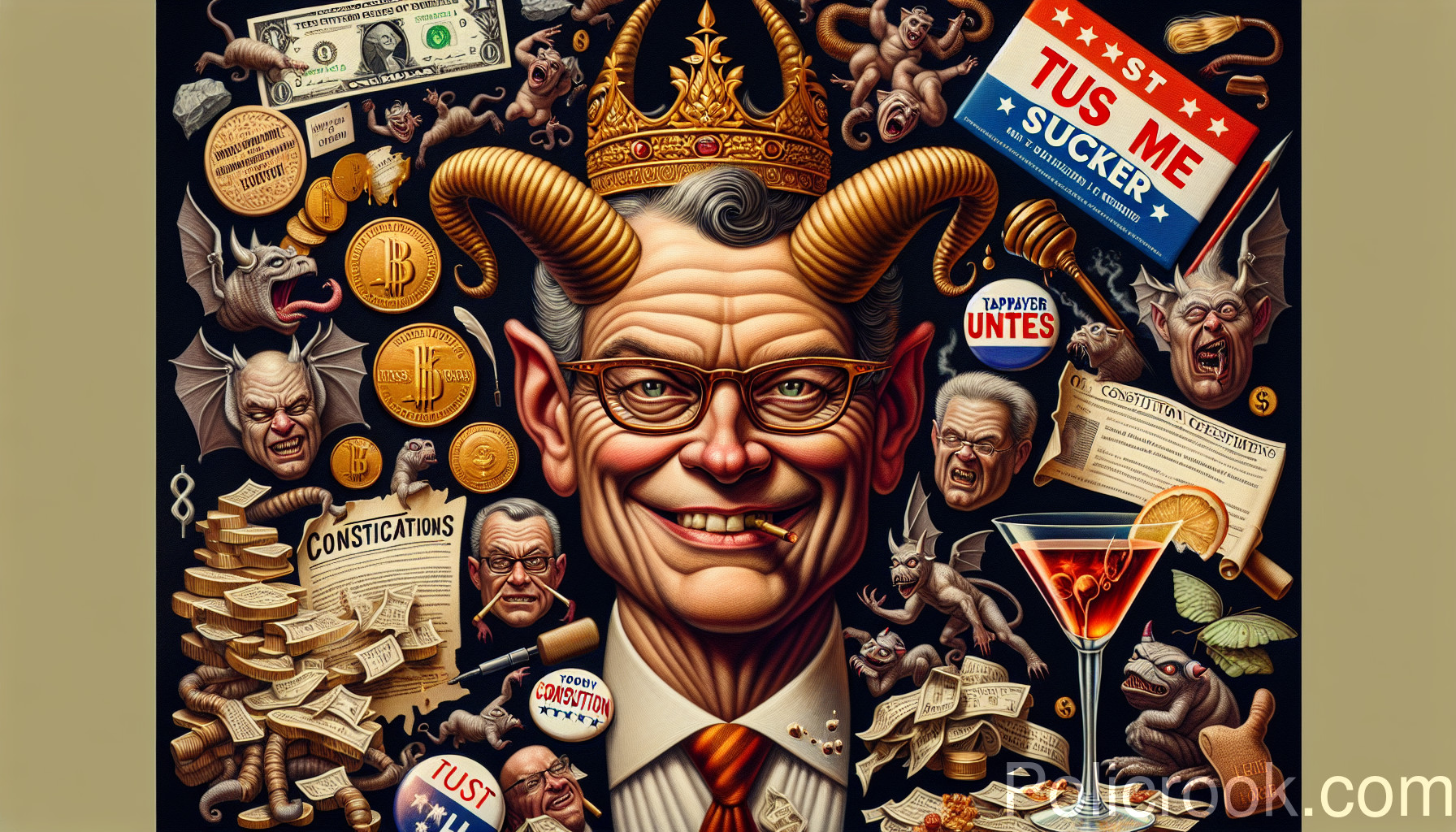
When All Else Fails, Invent
an Invisible Enemy
Call it “The Foreign Menace” or “The Global Conspiracy,” but it’s always the same theatrical ploy—a blatant misdirection designed to redirect public frustration away from their incompetence and deflect scrutiny from their own failures.
Just like a magician conjuring doves from thin air, these politicians create crises out of thin air, using the fear of foreign foes as smokescreens to guard their vulnerabilities.
Let’s unpack the process: when a politician’s ship starts listing in treacherous waters of scandal or ineffective governance, instead of addressing the fallout with transparency, they whip out the trusty boogeyman.
What’s easier than addressing healthcare or a crumbling education system when you can assert, with fervor and perhaps a theatrical hand gesture, that the Russians are hacking your essential services?
This sleight of hand concocts a narrative where anything bad or confusing in domestic life is attributed to malevolent foreign powers.
After all, what could voters do?
Fix their own lemonade stands?
No, they’d much prefer to rally around the campaign trail’s foghorn proclamations—“They’re after our way of life!”—echoing louder than any real debate about public policy.
Once this narrative is in motion, watch as chaos becomes the new normal for political discourse.
Suddenly, every time accountability rears its ugly head, there’s a catchy soundbite waiting in the wings: “Fake news!” And boom! The very fabric of reality starts to unravel.
Electoral cynics, conspiracy theorists, and disillusioned citizens begin to bark in unison, rallying to a chorus of irrelevance while their own dire issues remain untouched.
Here, foreign entities morph into treacherous phantoms capable of engineering crises within our own borders, pinning the incompetence of elected officials on a bizarre, external puppet master.
It's the ultimate political panto, where you shout at the villain as they wave from a distance, all while the true puppeteer—even worse—stands behind you, orchestrating the entire fiasco.
Take, for instance, the way politicians weaponize personal data breaches.
With a flourish, they yell, “They hacked my emails!” Cue the collective gasp from the populace, forgetting that the real scandal isn’t the technical breach but the dark underbelly of their own policies.
The public becomes enraptured by the spectacle, tuning into every melodramatic scene as they forget to ask: “Wait, what about the actual issues?” Emails become the shorthand for their uncertainties about leadership competence, fostering a narrative that disguises incompetence as intrigue.
Emails, you see, are now the currency of outrage, a kind of distraction so palpable, it’s hard to resist.
And while constituents scramble to support their idea of democratic freedom, the truth of their own shortcomings sits gathering dust.
Let’s not forget the art of invoking “democracy” being “destabilized” by these imaginary enemies.
Politicians have mastered the dramatic flair of clutching their own pearls, crying out against invisible threats that lurk behind the curtain.
“Protect our sacred democracy!” they proclaim, seducing the masses into a spiral of hysteria over freedoms that they—ironically—do little to uphold.
The enticing lure of defending abstract freedoms becomes a powerful tool for manipulation; it’s an emotionally charged bait-and-switch where any true accountability is drowned in the seductive noise of disorder.
At its darker intersections, this tactic breeds xenophobia and paranoia—a toxic cocktail served up to the already anxious public.
Politicians invoke fears of foreigners, painting them as thieves not just of jobs and identity, but of security itself.
A well-timed speech can transform a fearful population into loyal foot soldiers, ready to defend their “leader” against these spectral threats while the real heist—the siphoning of taxpayer dollars—continues unabated.
This isn’t merely corruption; it’s a toxic alchemy, where fear becomes reinforcement, loyalty becomes blind, and accountability vanishes into thin air.
As you survey this grotesque theatre of absurdity, the lesson for you, the voter, is this: once your politicians start waving imaginary phantoms, it’s time to question everything.
They’ll conjure shadows to cloak their failures, but remember, it’s not the judges, prosecutors, or police chiefs who are inherently corrupt.
It’s the politicians, relentlessly working to replace integrity with loyalty to their ill-begotten thrones.
Recognize this game for what it is and require more than scare tactics and scapegoats.
Demand proof, challenge narratives, and take back your autonomy, lest you become complicit in your own exploitation.
Wake up, and refuse to be sedated by fear.