Mastering the Soundbite and Non-Answer
Answer the Question You
Want, Not the One They Asked
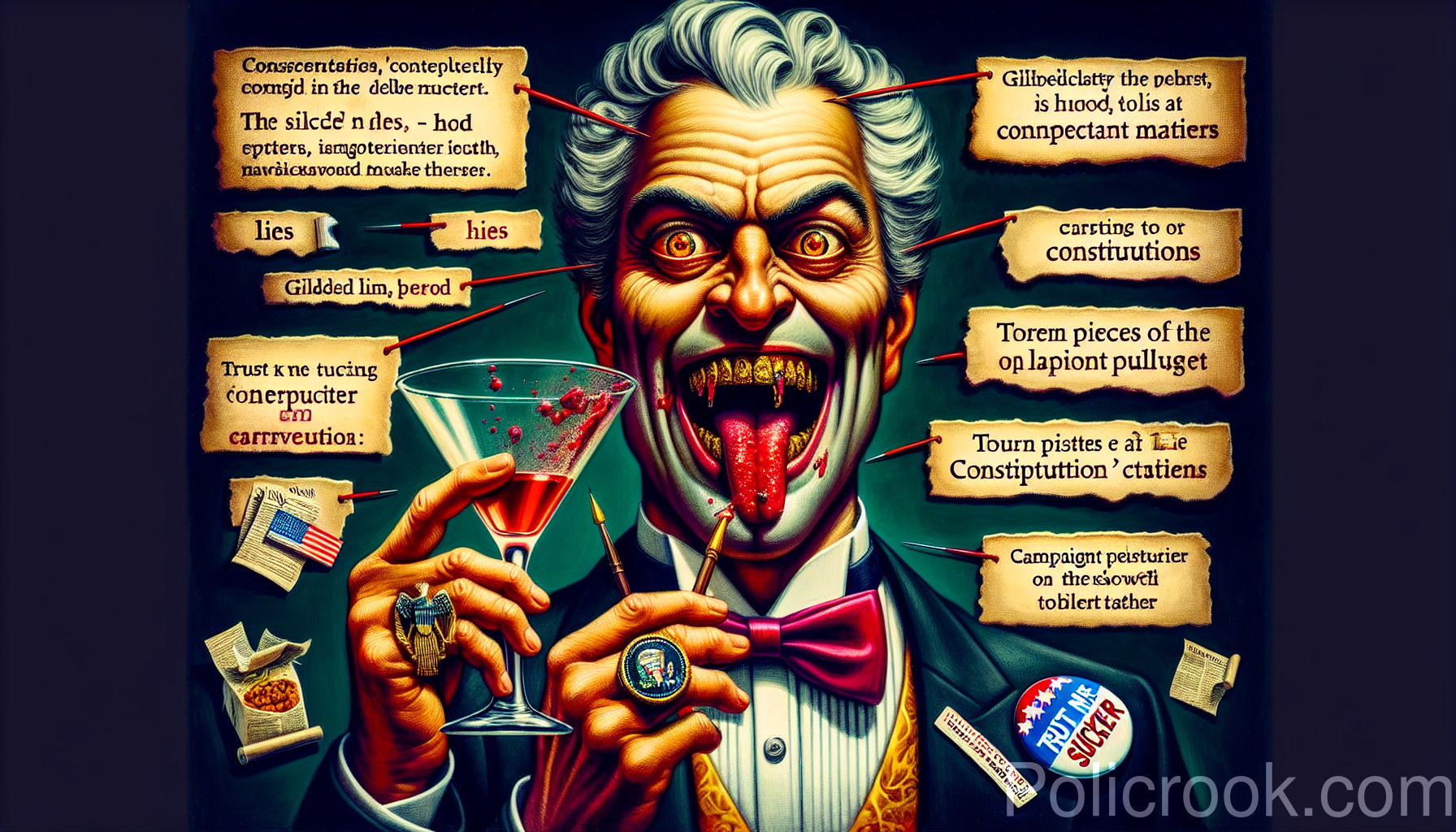
In the twisted theatre of modern politics, the art of evasion becomes a performance so refined, it could earn an Oscar for Best Actor in a Leading Role—politician. Welcome to the soundbite circus, where the truth goes to die, and accountability is nothing more than a punchline in a bad joke. Why answer uncomfortable questions when you can skillfully divert, distract, and deceive? Here’s a peek behind the curtain of this masterful manipulation, revealing the sleight of hand that keeps voters in the dark.
Step One: The Great Question Dodger
Picture this: a reporter tosses you a question that could uncover a scandal, and in response, you launch into a soliloquy about how many puppies go unfed each day. Politicians have spun this farce into an art form, turning inquiries into mere appetizers for their desired entrée of distraction. “That’s a brilliant question,” they beam as they deftly pivot, “but have you considered the pressing issue of global warming on our supply of cute cat videos?” The audience, hooked and diverted, forgets their original query, leaving the politician to feast on the vapid remnants of their non-answer. It’s a sleazy sleight of hand, and here’s the kicker—it works! Ordinary citizens end up more confused than intrigued, mistaking diversion for depth.
Step Two: The Precise Art of the Non-Answer
The longer the diatribe, the more lost the listener becomes—this is the golden rule of political discourse. Watch in astonishment as a simple question about healthcare twists into a nebulous lecture on abstract concepts, with a dash of “isn’t it wild how fast technology is changing?” For instance, the master manipulator says, “I hear your concern, and I assure you people are thinking about everything, including whether my cat prefers tuna over chicken. But let’s focus on the trends that unite us in this complex world.” And just like that, the audience is adrift in a sea of euphemisms while the real inquiry sinks like a stone. The myth of honesty is abandoned, the audience's gaze drifts, and the politician emerges unscathed—an escape artist in a bedazzled suit.
Step Three: Pose, Suppose, and Chuckle
Take a moment to relish in the absurdity of a politician winking at the camera with the sly confidence of a dog that just stole a steak off the counter. They veer into a realm of rhetorical flourishes that sound grandiose yet lack substance: “Let us not get bogged down in trivial misunderstandings when we must engage in robust dialogue.” This is not just bravado; it’s the cement that holds the façade together. Accompanied by charming smiles and self-congratulatory chuckles, they paint themselves as wise sages, while truth lies abandoned in the shadows, ignored like a forgotten campaign promise. This is where the art of non-disclosure meets charisma—the audience is dazzled while the truth takes a backseat, shackled to good intentions that never saw the light of day.
Step Four: Conclude with Dazzling Empty Comments
As the curtain begins to fall, here comes the pièce de résistance: the empty platitude. “At the end of the day, clarity is our shared goal,” they triumphantly declare. But what they really mean is, “Rest assured, I’ll avoid specifics while pretending I’m on your side.” The audience goes home, warmed by the glow of that comforting ambiguity, none the wiser. Politicians revel in this dance of deception, pulling the wool over eyes and weaving a tapestry of insincerity. Each time they do this, they continue the legacy of corruption, replacing accountability with a siren song of charisma.
The lesson for you, the voter, is this: Know that every time you hear a slick, rehearsed soundbite, you’re being seduced by shadows—sleight of tongue meant to keep you sedated while decisions are made behind closed doors. It’s not just a show; it’s a con, playing out in real time, designed to transform noble governance into a circus of clowns who get applause for their deceit. This system rewards the loyal over the honest; it cultivates dependency on diversion and thrills over truth. So, the next time a politician starts dodging your questions with the aplomb of a nightclub magician, remember this: You’re not just participating in a democracy; you’re handling a high-stakes game where the deck is stacked against you. Stay vigilant, or risk being the unwitting pawn in someone else’s political game of Monopoly—where the real lives at stake are lost in the shuffle.