Donate to "Neutral Causes" to Whitewash Your Name
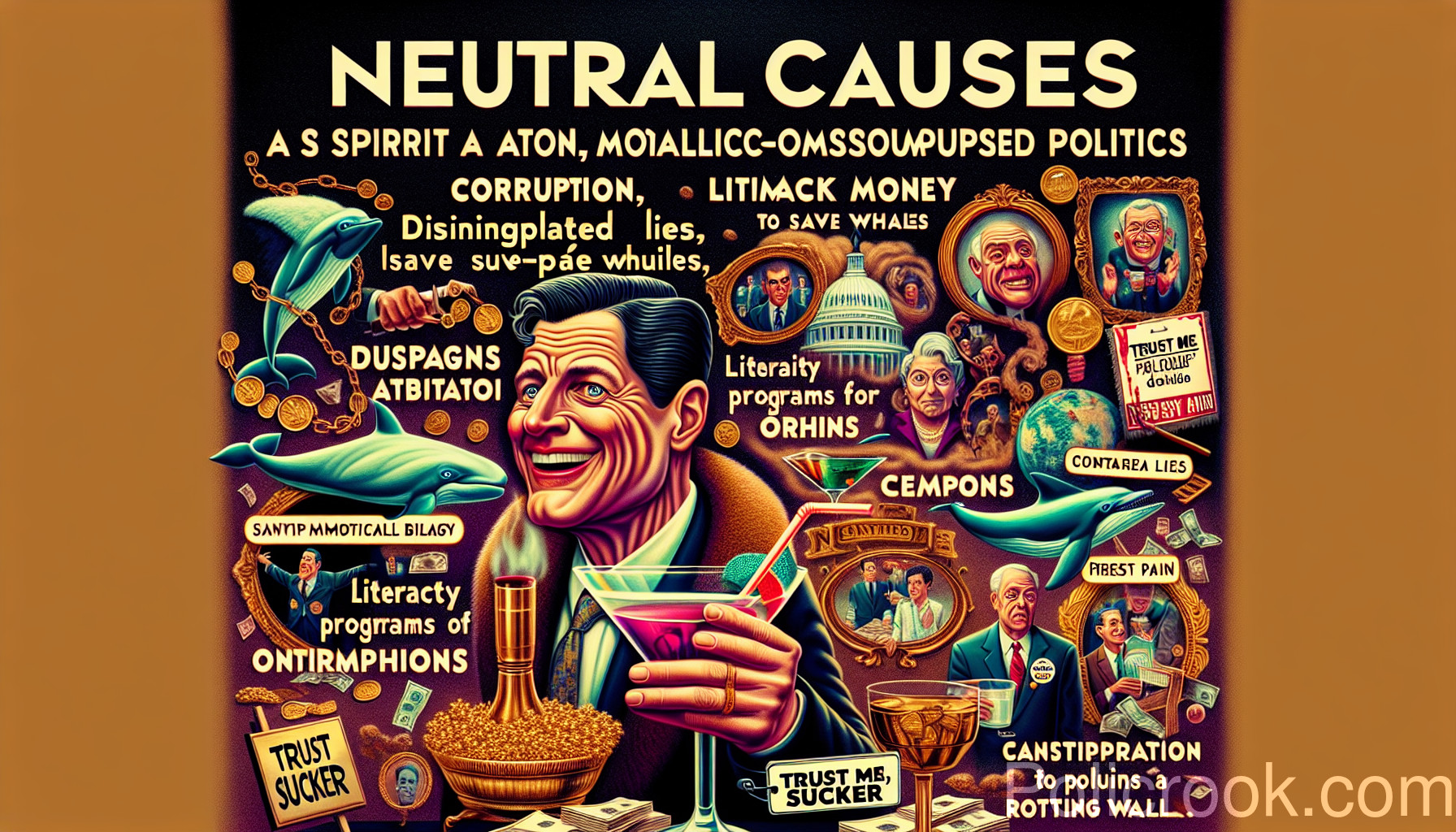
Saving the Whales Hides a
Lot of Skeletons.
There’s a sick, twisted beauty to the way politicians sidestep accountability while masquerading as charitable angels, leaving voters blissfully unaware that the same hands handing over checks to save the earth are often inked with the fingerprints of scandal.
Corruption doesn’t wear a black hat; it shines like a freshly polished trophy, and what better polish than a generous donation to a cuddly, feel-good cause?
First, let’s talk about the art of distraction.
Politicians pick causes that elicit sympathetic “awws” from the public—saving whales, fostering literacy, combating climate change—as if these noble initiatives could wash away the stink of their backroom deals.
Imagine the headlines: “Local Politician Feeds Hungry Kids!” Meanwhile, you’re still turning a blind eye to policies that starve public services.
The crafty politician throws in a splash of environmentalism, because who can argue with a compassionate campaign photo taken next to an endangered species?
Nothing screams integrity like a thumbed-up selfie with a beached beluga—but don’t forget, while you're saving the sea life, you’re still draining the lifeblood from your constituents.
Yet, there’s something more sinister at play here, known colloquially as the “virtue rinse cycle.” Once a politician decides to dabble in charity, it’s not enough to simply donate; it’s about creating a spectacle, a carnival of goodness where charity becomes a performance art rather than an act of true generosity.
Politicians rent out their selfies for public approval, polishing their reputations with a faux-humility that would make a used car salesman blush.
Your tax dollars?
Those only fund the lazily “good” initiatives, while the shady deals that put a whole city in the gutter don the warm robe of respectability.
When it comes to cash, the motto is clear: “money speaks louder than ethics.” Once you’ve established your cozy little relationship with your cause-du-jour, the floodgates open.
The more money you donate to your little virtue projects, the more you convince the world—and, crucially, yourself—that you’ve become a paragon of morality.
But what’s lurking beneath this glossy surface is more rotten than a week-old fish.
You’re trading in influence while the good folks out there are scratching their heads, wondering why their schools are crumbling, and their crime rates are climbing.
Then there’s the dance of hypocrisy.
A politician whose reputation hangs by a thread can always rely on a sagely performance of the “Spin Doctor Special.” Got a scandal?
Blame it on the houseplant, remember?
Every scandal becomes an opportunity to showcase just how “in touch” they are with community needs by promoting their latest pet project.
Individual city problems turn into sacrificial lambs for the sake of political theater.
“Look at me! I’m adopting innocent puppies while siphoning funds meant for their well-being!” It’s a con game where the masterminds wield altruism as a weapon.
Just when the public begins to dare to peek behind the curtain, bam! A photo op with puppies!
It’s all smoke and mirrors—the entire charade shoots for appearances while allowing the insatiable appetite for power and profit to meander unchecked beneath.
A solid dose of manipulated morality, a wealth of campaign contributions, and voilà! The narrative constructs a wholesome façade that softens the hardest truths.
Every politician in the game plays to their own audience, treating voters like marionettes who applaud their craftiness, laughing all the way to the bank draped in that philanthropic glow.
So here’s the hard truth: unless you recognize this political masquerade for what it is, you’re contributing to your own exploitation as you cheerlead for the integrity of a con artist.
The lesson for you, the voter, is this: the next time someone shows up claiming to be your champion of change, remember, they might just be draping their self-serving agenda in the guise of charity.
Politicians aren’t blind to their own selfishness; they thrive on it, and they’re counting on you to remain oblivious.
Don’t let their feel-good initiatives cloak their darker motives—it's your awareness that can keep them from getting away with murder while wearing a superhero cape.
Don’t just follow the money; demand to see what those dollars really buy.