Invent New Terms for Old Crimes — "Innovative Financial Engineering"
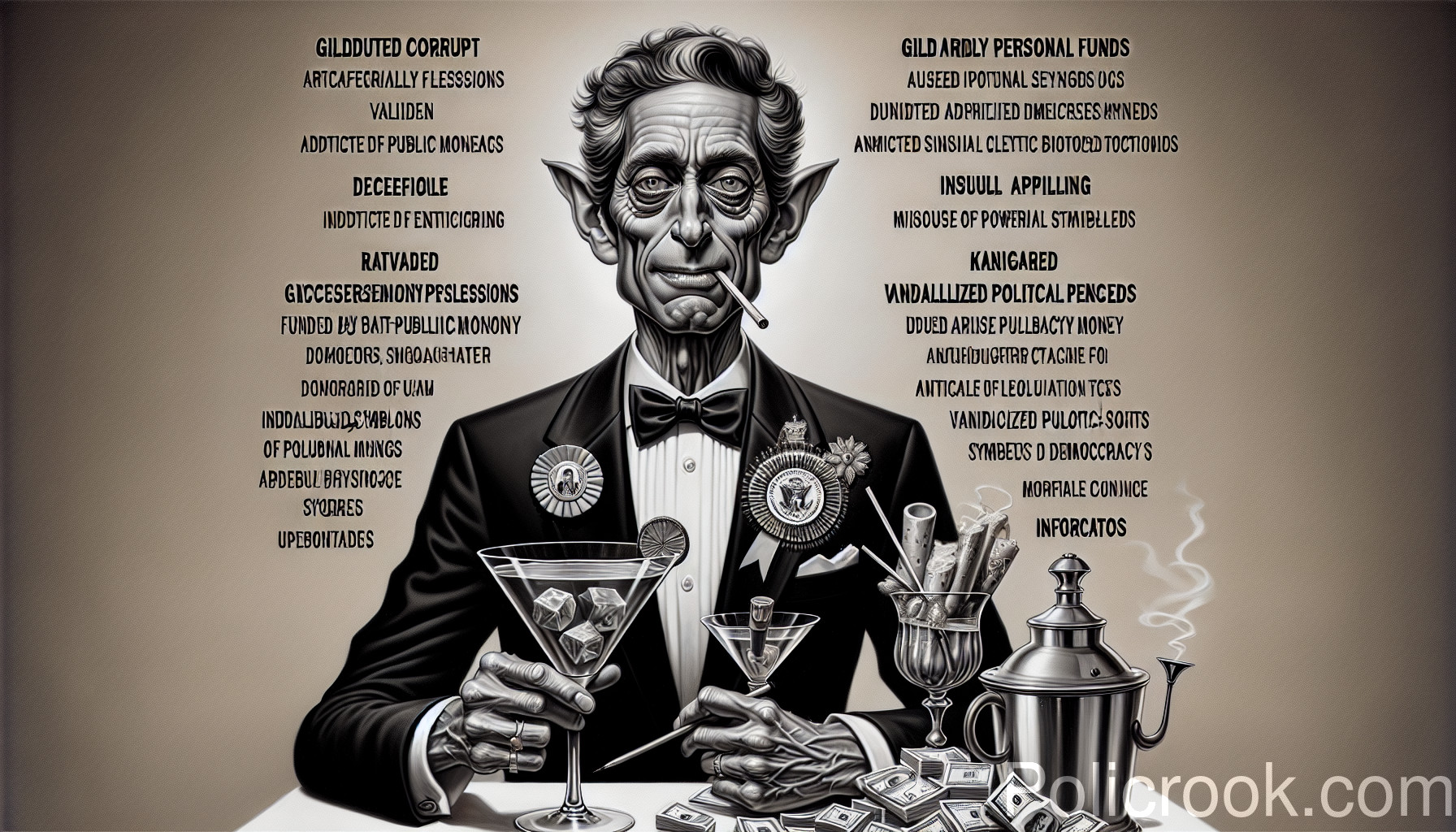
Rename It. Reframe It. Sell
It.
Here, every criminal act is repackaged, rebranded, and served with a side of euphemism so smooth it could lubricate the gears of a corrupt machine.
Forget about accountability; this is a masterclass in how to pervert the lexicon of democracy to fit your unscrupulous agenda.
Drowning in the dregs of political credibility?
Fear not! There’s a gilded umbrella waiting to shelter you from the storm of public scrutiny.
By twisting straightforward terms into BuzzFeed-ready slogans, politicians have created a lexicon that insulates them from the very crimes they commit.
They’ve elevated theft into “Innovative Financial Engineering,” a phrase so light and airy it could float away if not weighed down by mountains of cash.
This linguistic sleight of hand isn’t just clever wordplay; it’s a calculated tactic to manipulate perception.
When the public hears "financial innovation," they think of investment and progress, not the cozy backroom deals that line political pockets.
This isn't merely a play on words; it’s a strategic dismantling of meaning itself.
As voters, we’re often fueled by our desires for transformation and progress, leaving us vulnerable to the siren song of politicians promising to “leverage resources” through “Public-Private Partnership Opportunities.” When bribery becomes about "leveraging relationships," it’s suddenly dressed in a tuxedo, a shining beacon of supposed collaboration instead of the dark dishonesty it truly is.
And the press?
They lap it up, articulating every buzzword while the realities of corruption smirk in the back row.
Realizing just how effective these manipulators are underscores how dangerously creative they can be with their rhetoric.
“Extortion” is no longer a crime; it’s a “Dynamic Wealth Redistribution Strategy.” What can possibly sound more altruistic than that?
By slapping fanciful names on nefarious acts, politicians shield their wrongdoing from the glaring light of accountability.
It's the perfect camouflage for corruption: a fragrant perfume that masks the stench of fraud.
Now, let’s take a deep dive into the theater of the absurd, where politicians prance on stage, grandstanding for an audience of duped constituents.
Step right up and witness the “Promise of Deficit Obliteration” act, a masterclass in misdirection promising everything and delivering nothing.
Right after the election, watch deftly as the conversation shifts from accountability to “economic reform” quicker than a magician’s rabbit can disappear.
Transparency?
That’s the stuff of fairy tales; once elected, the only thing left clear is how murky their intentions become.
The very fabric of our governance seems woven with strands of deception and wishful thinking, where each politician is but a performer in a tragically comedic skit.
They spin narratives designed to cast themselves as heroes battling for the people, even as they loot and pillage.
Mix in a touch of “alternative facts,” and suddenly, the very notion of truth becomes as malleable as clay.
Did you grow up an underprivileged genius?
Why not say so! There’s no need for genuine humility when fantasy is a click away.
But what stands out the most in this circus of language is how it normalizes dysfunction, rewarding those cunning enough to exploit it.
Rather than dismantling the toxic culture that breeds such behaviors, society inadvertently raises a toast to the charlatans who twist and bend reality to their benefit.
We’ve allowed these politicians to redefine our understanding of integrity, accountability, and even our very own democracy.
So, dear voter, here is the lesson for you: The next time a politician glides into your life on a verbal carpet of empty promises, remember this stark reality.
Terms like “public-private partnership” and “innovative financial engineering” are not merely references; they’re license plates on the fleet of corruption.
It's not the institutions themselves that are corrupt, but the politicians who have invaded and corrupted them, replacing integrity with obedience.
Be vigilant, demand proof, and dissect the language being served up on your plate.
If you don’t, you’re not just a spectator—you’re an accomplice in the cons that have become the lifeblood of modern politics.
Keep your eyes peeled and your skepticism sharp; the next misnomer could be just around the corner, waiting to ensnare your trust.