Redefine Inequality as "Opportunity Gaps"
They Don't Have Less. They
Just Have Different Opportunities.
Here lies the darkly comedic enterprise where "inequality" transmogrifies into sterile buzzwords like "opportunity gaps," transforming glaring disparities into mere marketing failures.
Welcome to a reality where the hungry are mislabeled as “aspiring champions of self-initiative,” and the downtrodden are held responsible for the very systems that have conspired against them.
This is political manipulation at its finest—a grotesque masquerade draped in the sumptuous fabrics of euphemism and deception.
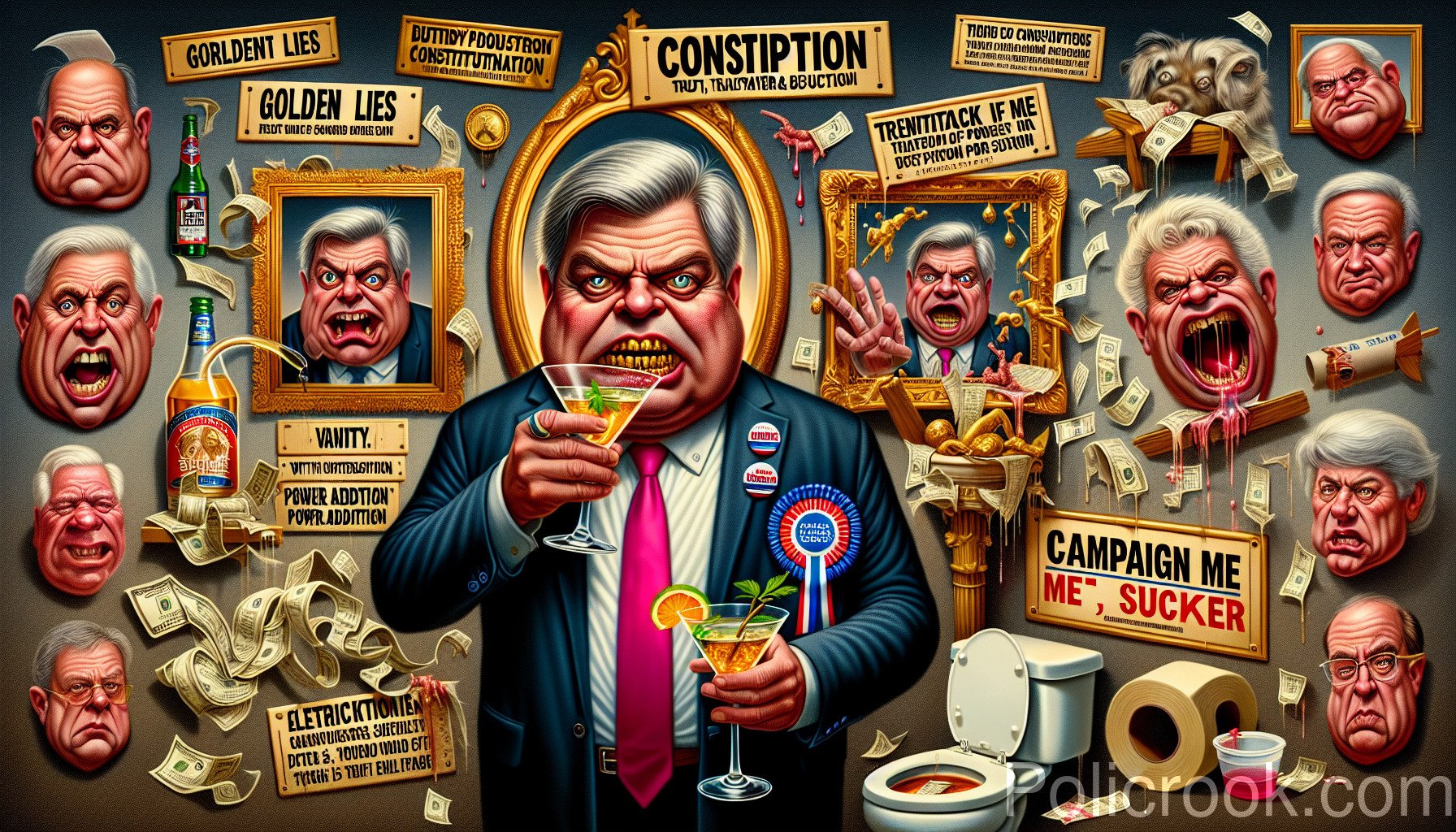
Imagine a politician, clad in a tailored suit, telling a crowd, “We aim to close the opportunity gap!” What they mean, of course, is they’ll continue to widen the wealth chasm while reassuring the public that the journey is an “inclusive endeavor.” By repackaging harsh truths as motivational phrases, they paint the impoverished not as victims, but as underachievers beset by personal failures.
No one dares to mention the systemic barriers or exploitative practices woven into the economic fabric.
Instead, these skilled manipulators sprinkle terms like “skills mismatch” and “personal agency” like fairy dust, ensuring that the blame is deflected away from the very government that failed its citizens.
How do they masterfully spin this web of lies?
By crafting their language with the precision of a Michelin-starred chef creating an illusion of gourmet cuisine.
“Opportunity gaps” sounds so much more palatable than “deprivation” or “failure.” With a few well-placed platitudes and a dash of jargon, politicians can serve up reality disguised as a hopeful feast.
Yet beneath this glossy presentation lies the cold truth: when the masses are starving for genuine change, they’re instead fed a repulsive buffet of obfuscation, leaving voters choking on the empty rhetoric.
At public forums under the guise of “community engagement,” the once-unapproachable elite stand like porcelain statues behind a fortress of miscommunications—a wall designed to dissipate accountability while amplifying dissent.
It’s a performance, really, where constituents are encouraged to spill their grievances while the puppeteer nods thoughtfully, exploiting their outrage as fodder for the next round of empty promises and sanitized chatter about “collaborative governance.”
Should the distressed dare voice their complaints, the masters of spin pivot with a smile, reminding everyone that their plight is simply a result of “poor personal choices.” Ah, personal choices—the comforting bedrock of conservative ideology.
In this warped narrative, "earning differently," a euphemism for the unscrupulous harvesting of public funds or corporate bailouts, becomes a moral high ground for the privileged.
The victims, shackling themselves with shame, retreat into silence, paralyzed by the weight of their perceived failures.
The system is predator and prey, yet in this grim tableau, every player knows their part.
For the disillusioned voters, political promises morph into paralyzing red tape; yes, more studies, strategies, and convoluted plans laden with bureaucratic jargon.
When demands for tangible solutions arise, these spin masters wield complexity as a weapon.
They craft “overarching strategies” that resemble endless loops and dead ends, ensuring that the issues requiring urgent attention slip through the cracks as the populace stagnates in a quagmire of despair.
And you—yes, you—are left wondering why nothing ever seems to change.
Ultimately, this spinning of reality isn’t just ruthless; it’s also a sinister kind of artistry.
Politicians turn suffering into a commodity from which they profit: empathy is stripped and recycled into hollow declarations of progress, distracting from the empty hands raised in agony.
They’re not just selling hope; they’re auctioning off delusions.
So, listen closely, dear voter.
The lesson for you is this: Politicians are experts in redefining your struggles into their scripts, using your despair as a stepping stone for their ambitions.
If you don’t learn to spot this artifice, you’ll unwittingly applaud the very exploitation that keeps you in chains.
Not all in positions of power are compromised, but know this: politicians will tirelessly work to cultivate loyalty over integrity—every day you remain passive, you inch closer to losing your voice in a chorus singing someone else’s praises.
Wake up, recognize the con, and demand more than just “opportunity gaps.” Demand the truth.