Co-Opt Slogans — Empty the Words of Meaning
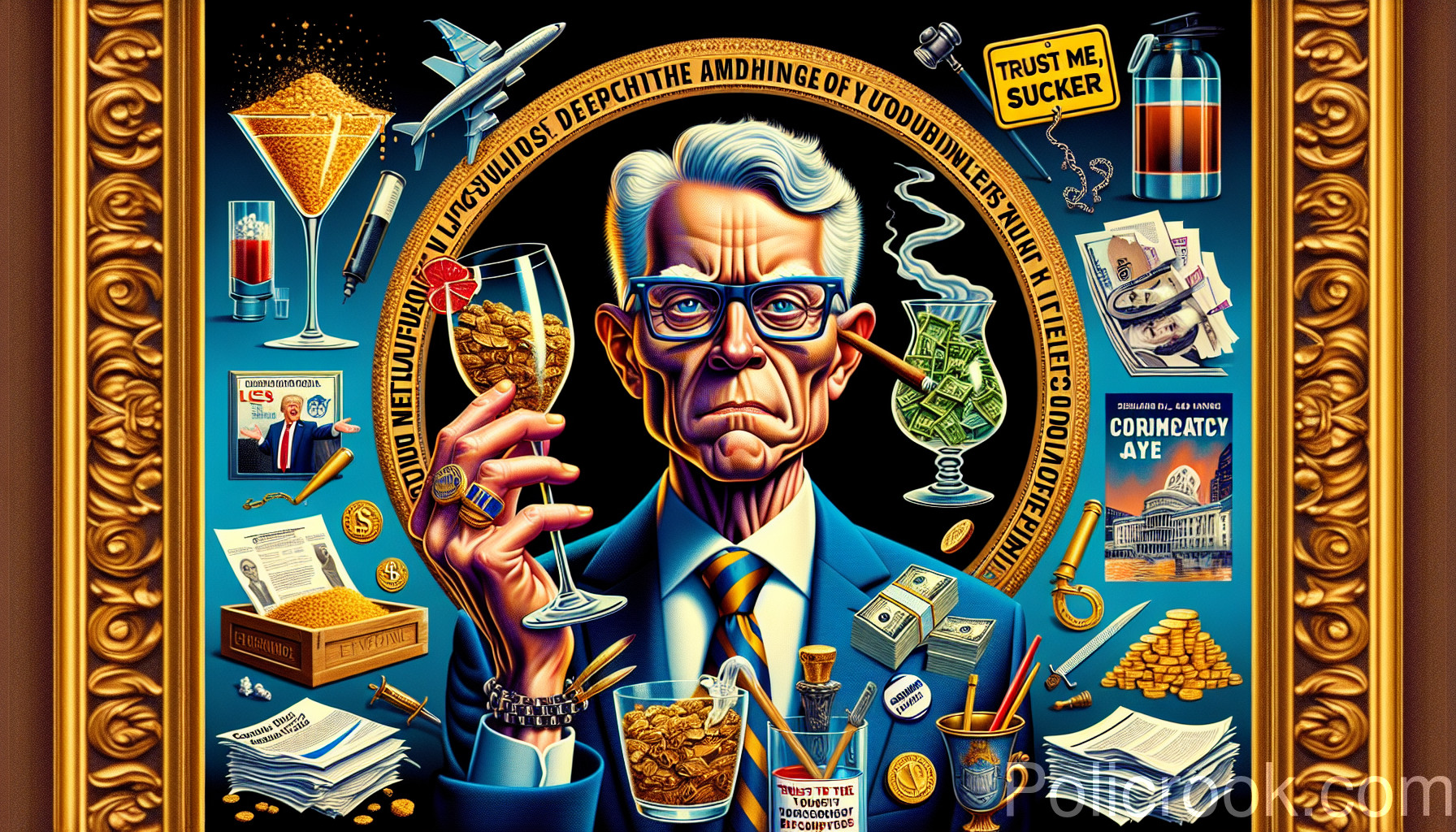
The More You Chant It, the
Less It Means.
“Freedom.” “Justice.” “Change.” These aren’t just words—they’re weapons forged in a crucible of rhetoric, designed to lull the masses into a hypnotic chant while your elected officials pilfer the coffers.
Every repetition is a step deeper into a neurological stasis where ambiguity thrives and lucidity is the first casualty.
Let’s peel back the layers of this manipulative rhetoric: the slogan is nothing more than an incantation, repeated until the original meaning evaporates like alcohol on asphalt, turning into a hazy mirage of satisfaction for those desperate enough to believe.
The artful politician—masters of linguistic smoke and mirrors—can make freedom synonymous with subjugation, turning the rallying cries of the oppressed into mere hashtags for the sake of trending on social media.
When campaign speeches become little more than a cultural recycling bin of forgotten ideals, you’re left questioning not just whose freedom is being celebrated, but whose chains are being masked under glossy pamphlets and Instagram filters.
And what about branding?
Imagine slicing up meaningful phrases and wrapping them in the garish packaging of catchy logos and color schemes.
“Freedom for All” morphs into yet another bureaucratic mantra, hiding the crass truth underneath: that individual liberties are often bartered away as collateral damage in a twisted game of political one-upmanship.
Underneath the empty slogans lies a savage irony—where “justice” is stripped of its virtue and rebranded as “just us,” leaving vast swathes of the population disenfranchised, all while the peddlers of these hollow narratives line their pockets.
Ah, the irony! Politicians know that a well-placed T-shirt can do the heavy lifting for them.
Why sweat in the trenches for actual reform when you can slap on a ‘CHANGE’ slogan like armor, then sit back, chuckling behind closed doors, ready to withdraw at the first sign of real activism?
While the social media warriors rant and rave under the illusion that their hashtags mean anything tangible, the puppeteers of power tighten the strings, ensuring that real change is a mirage decoupled from their cunning campaigns.
When genuine crises rise to the surface, oh boy, here come the distractions—like a wizard conjuring a storm of jargon.
Watch as a politician flings around bureaucratic gobbledygook, sparkling words that gloss over systemic failures like confetti thrown at a parade.
The trick is to obfuscate, to shroud reality in complexity, leading to a consensus of confusion among constituents wondering if they've just attended a political rally or witnessed an avant-garde performance art piece.
And as for context?
It serves as a canvas for these deceitful artists.
A “Climate Emergency” can be spun adroitly into a “Climate Opportunity,” because why bother with substantive environmental reform when you can repurpose despair into profit?
It’s the pinnacle of contemporary political chicanery—a playbook turning the noble aspiration of activism into an insufferable circus act, while the jugglers and clowns collect standing ovations for doing nothing of substance.
So, the lesson for you, the voter, is this: when you hear those recycled slogans echoed back to you like mantras from the empty husks of ambitious serpent charmers, don’t join the chorus.
Recognize that these words are not harbingers of change but the scribbled notes of a corrupt symphony, where the only thing that matters is a bankrupt moral ledger full of “I’m sorrys” and “not my faults.” Be wary, because the true villains of this tale are the power-hungry puppeteers who will hollow out the institutions meant to serve you, replacing integrity with a pact of blind loyalty among those who’ve decided that the only guiding principle in politics is to keep you in the dark while they glide effortlessly into the light.
Next time you chant a feel-good slogan, remember: it may just be the last echo of a betrayal you didn’t see coming.