Use Shell Companies to Buy Newspapers — Disguise Your Hand
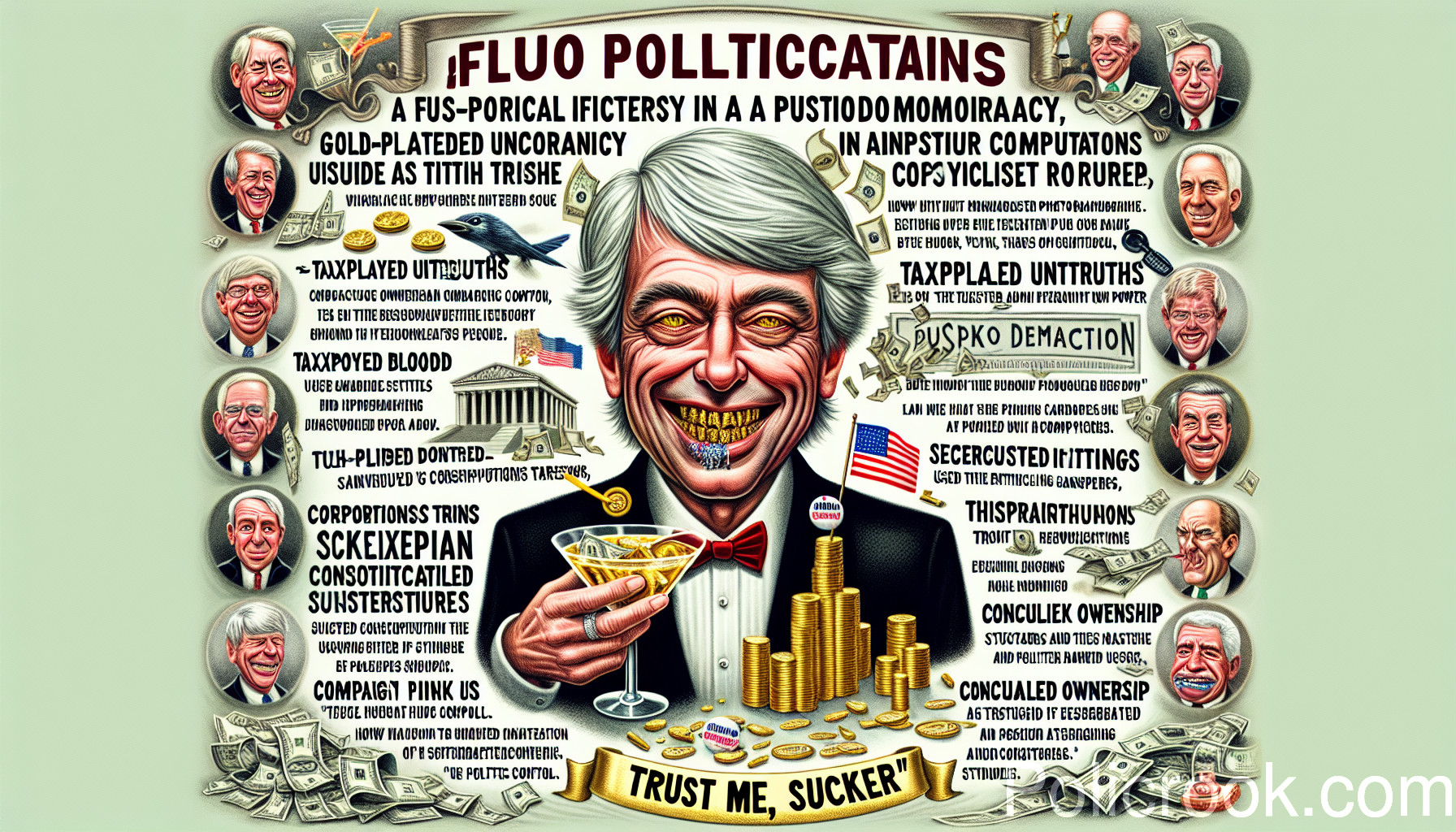
Real Power Doesn't Put Its
Name on the Deed.
They’ve learned to thrive in the dark, wielding anonymity like a sword, bludgeoning the very institutions that once served the public good.
The tactic is simple, yet profoundly effective: use shell companies to purchase newspapers, disguising the true hand that seeks to shape the narrative.
Welcome to the sleazy underbelly of political power grabs, where motives are cloaked in obscurity and the only voice you hear is whispering sweet nothings to the highest bidder.
Imagine for a moment, a hefty sum of cash funneled through layers of faceless corporate entities.
Each shell company shields the real puppet master from accountability, creating an impenetrable fortress of anonymity that even the most diligent of journalists can’t penetrate.
This isn’t just a clever ruse; it’s a full-blown con game that leaves voters entrapped in a prison of manufactured consent.
The strategy rests on the “invisible handshake”—that elusive agreement that never sees the light of day.
Politicians posturing as benevolent benefactors buy failing newspapers through intermediaries who might as well be ancient artifacts.
You’re not just buying a platform; you are securing an echo chamber, where only your voice resonates.
As you pull the strings from behind the curtain, a village of editors dances to your diabolical tune, pumping your propaganda straight into the veins of public perception.
Who needs bad press when you own the press?
So, when you hear the phrase, “the pen is mightier than the sword,” just know it pertains to the red ink of your very own news outlet.
This is the age of information warfare, and your ink flows with the clarity of fine wine—but only if you drown out the competing voices of truth.
And it gets worse: journalists become unwitting pawns, trumpeting your grand narrative while drowning in the poison of their own complicity.
“Fire the pen,” they infer, brandishing it as if it were a weapon of mass distraction, while you quietly guffaw behind the scenes.
But here’s the twisted beauty of it.
The politician, having stitched together their mendacious narrative, can now strut around like a peacock amongst a herd of bewildered pigeons.
Scandals, instead of burying them, transform into glorious tales of resilience—or so the headline will proclaim.
When confronted with a scandal that smells worse than a dumpster behind an all-night taco joint, the savvy con artist turns the narrative on its head, spinning it into a story of triumph.
“Look how I rose above adversity!” they smugly declare, while the populace, sitting transfixed like moths to the flame, fails to notice the manipulative ballet unfolding before their eyes.
The final ingredient in this recipe for democratic disaster is to control the discourse itself—a deft maneuver that allows you to drain the marrow from the bones of public trust without breaking a sweat.
The more sensational the distraction—whether it be an incendiary catfight between rival politicians or a scandal on par with Shakespearean tragedy—the less likely the electorate is to notice the rising tide of corruption drowning the very foundations of their democracy.
Entertainment is the opiate of the masses, and with every petty feud televised, your thievery continues unabated.
As you laugh your way to power, remember this: your shadows are your greatest allies.
The voters, wrapped in their own ignorance, remain blissfully unaware of the puppet strings tied around their very perceptions of reality.
You’ve successfully mastered the art of media ownership, masquerading as a champion of the common folk while nurturing a festering rot at the heart of true democracy.
But here’s the bitter truth: this isn’t just satire—it’s the playbook your elected officials are already using.
If you can’t see the names behind the curtain, you can’t hope to challenge the corruption lurking in your local newspaper.
Not all affiliates in the judiciary or law enforcement stand on shaky ground—some still cling to integrity.
Beware of the politicians who wield power like a magic wand, replacing honest service with fealty.
Unless you wake up and demand accountability today, tomorrow may find you clapping like a seal for your own exploitation.
Look closer, think harder, and never forget to ask, “Who truly benefits from this narrative?” Your eyes may look toward the screen, but your mind must scan the shadows.
The time for complacency is over.