Master the Art of the Non-Answer — Answer the Question You Wish They Asked
Reality is Negotiable. So
Are Questions.
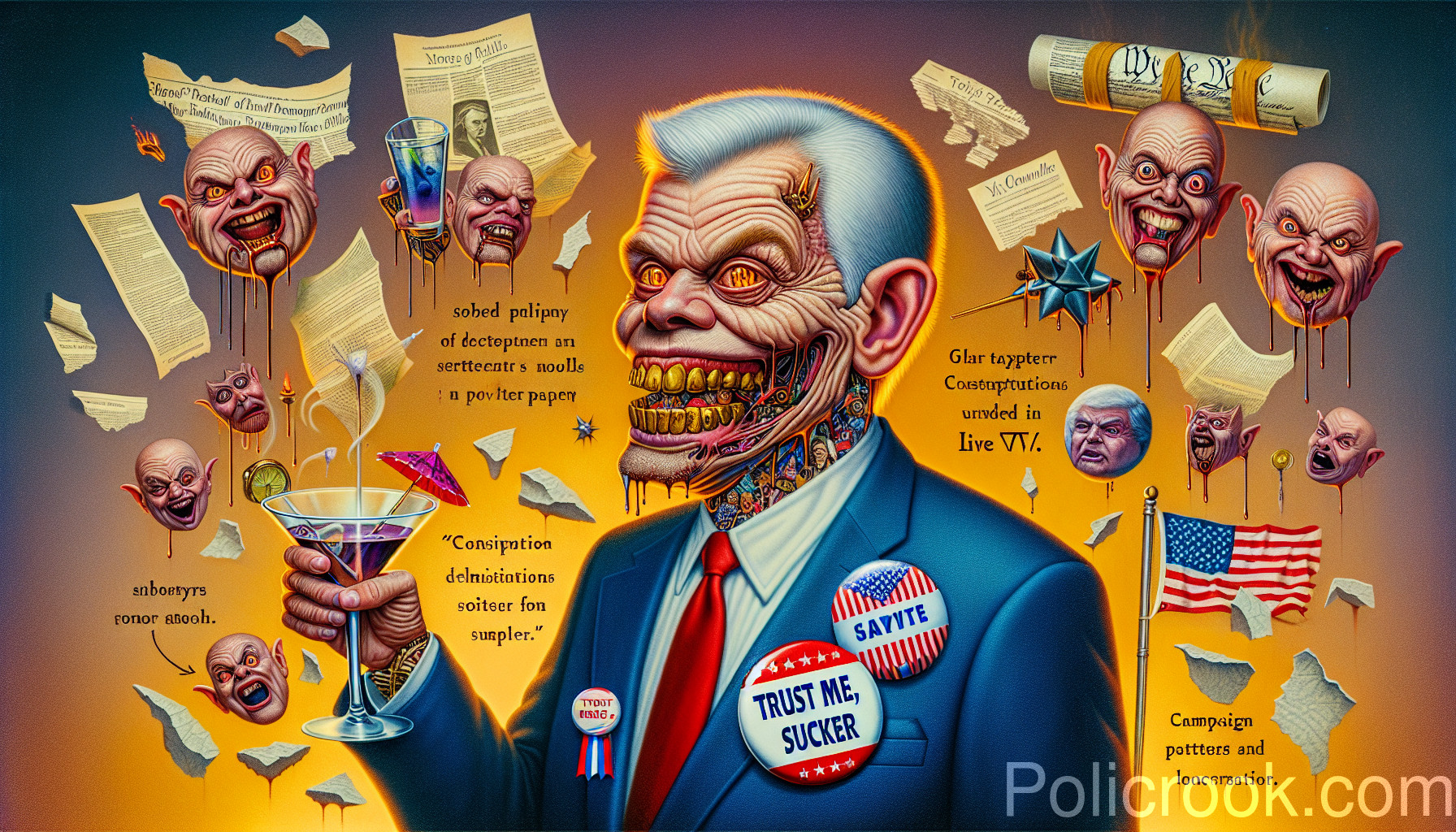
Welcome to the illustrious arena of the non-answer, the slick maneuver that keeps your constituents dazzled while you pilfer their trust.
With a mixture of disarming charm and slick deflection, you can transform your audience's probing questions into a sparkling array of diversionary tactics.
Let’s unravel this dark performance art that is the heart of political manipulation.
Picture this: a voter rises, hopes brimming like a balloon filled with sunlight, ready to burst forth with questions demanding accountability.
But oh, you—glimmering, charismatic you—are like a magician who has mastered the art of distraction.
You know the moment you spot that earnest, seeking gaze locked onto you; it’s the moment to flip the script.
A grin spreads across your face, so wide it rivals the Cheshire Cat’s.
You nod your head thoughtfully, projecting wisdom as if contemplating the mysteries of the universe when in reality, you’re diving into the depths of nothingness.
This isn’t just amateur sleight-of-hand; it’s a masterclass in evasion.
You notice the questions that threaten to cut through the smoke and mirrors—the inquiries into shady financing, questionable ethics, or the unfulfilled promises that litter your campaign.
But you’ve been trained well, my friend! You pivot like a contestant on a game show, transforming the question about your latest scandal into a thrilling tale of “how we are creating jobs,” even if your policies are about as clear as mud.
This rebranding of reality not only confuses your supporters but also sends media narratives spiraling away from accountability toward an applause machine of euphemisms and bluster.
And what about the media?
They’re part of this illusion too, lapping up the shiny distractions unless someone calls them out.
Because let’s face it: when a politician can deflect a tough question with a flourish, they don’t just dodge responsibility; they earn accolades.
“Look at their confidence!” they’ll say, as if styling a glorious facade absolves them of integrity.
Meanwhile, the public laps up these shiny narratives, believing in the miraculous job growth potential while the politician’s true agenda simmers unseen in the shadows.
Reality?
Just a mere background set designed to be rearranged at will.
Your audacity will serve you well, darling devourer of public trust.
You wield narrative creation like a seasoned artist, slapping paint onto a canvas with reckless abandon.
“What’s important is that we are focusing on community engagement,” you will say, even if your idea of engagement is a photo-op amid sycophants and placards.
You forge narratives that sound great in speeches but are rendered meaningless the moment policy hits the ground.
Let’s inject some clarity for our viewing audience: this non-answer game isn’t just innocent misdirection; it’s the systemic manipulation of trust and institutions.
Politicians replace honest discourse with agile gymnastics of words, thus normalizing deceit as a necessary part of governance.
They perpetuate a cycle where integrity is bartered off for blind loyalty, leaving a crop of politicians sprouting from the same tainted soil.
So, dear reader, as you consider your role in this elaborate deception, remember the powerful trick that lies at its core: it’s not about them; it’s about you.
Yes, you—the voter—whose capacity to question has been hamstrung, whose critical lens is often dulled by charismatic delivery.
The façade shrouds an all-too-familiar reality: politicians thrive on your complacency, your willingness to accept smoke and mirrors as a substitute for truth.
Next time you are offered a dazzling non-answer, hear the alarm bells ring in your mind.
Recognize that while politicians may not always be operating in the best interest of their constituents, the institutions themselves—judges, law enforcement, and civil servants—often remain intact.
Their mission is corrupted by those who seek to replace their integrity with blind loyalty.
The lesson for you, the voter, is this: until you demand accountability, and question the narratives that pollute our discourse, the political game will only spiral further into chaos.
Stand vigilant.
Don’t just accept words at their shiny face value.
Look beneath the glimmer of their unfounded reassurances and find the spine of truth buried beneath the rubble of deceit.
Only then shall you begin to reclaim your agency, and perhaps, restore a semblance of trust to the corridors where loyalty isn't mistaken for integrity.