Hijacking the Narrative Through Fear
Fear Makes Even the
Smartest People Stupid
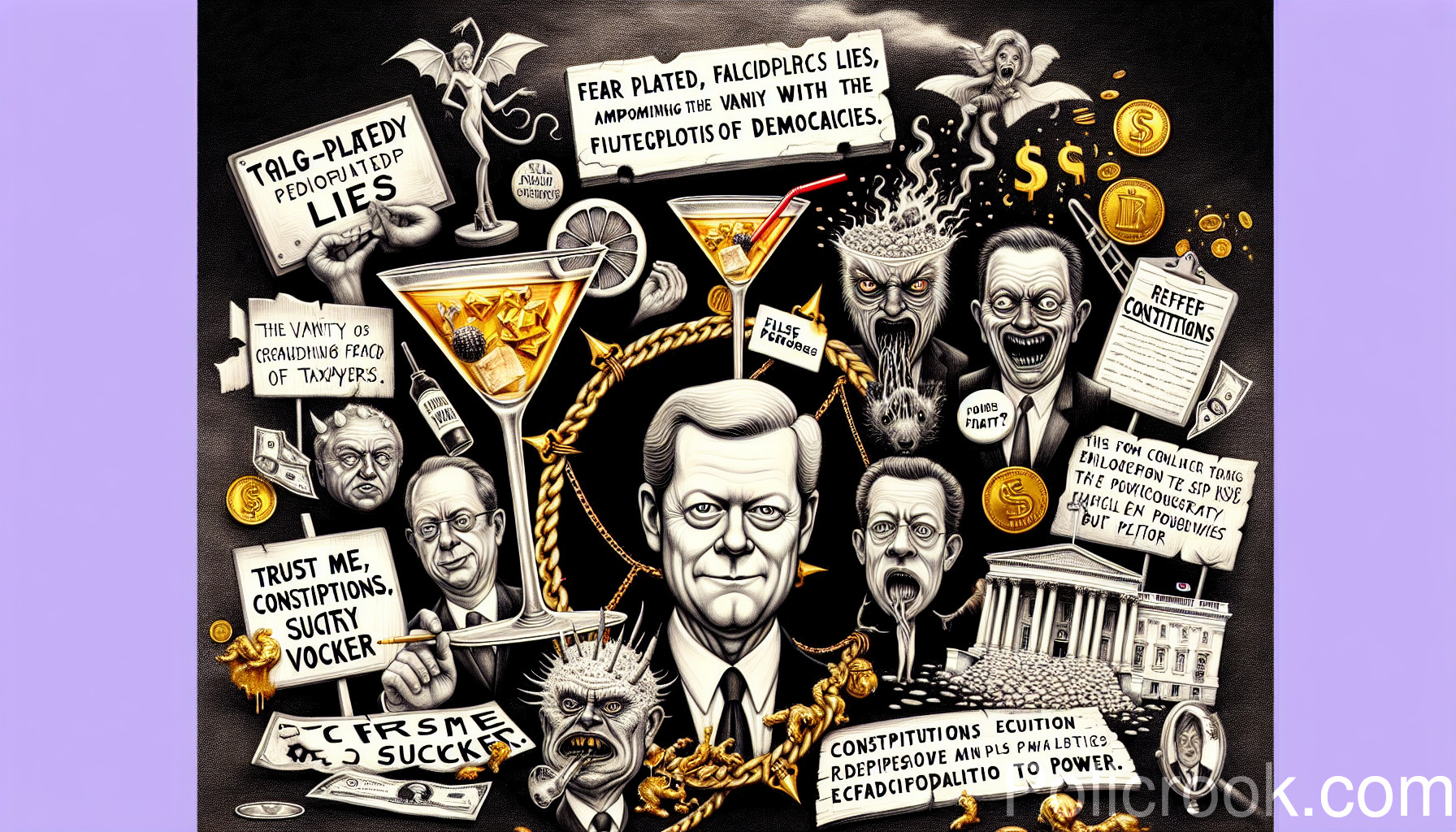
Welcome to the shadowy world of fear-mongering—where logic lies bound in a basement and paranoia prances around in the spotlight. This is not merely a tactic; it’s a grotesque ballet danced on the grave of rationality, and your elected leaders are the choreographers. When they pull the strings of society, it’s like a puppet show playing out in the theater of the absurd—and guess what? You’re the audience, clapping along as the curtains close on your own interests.
Study the Playbook of Terror—the mantra throbs in the corridors of power. Forget common sense; whip empathy into submission and peddle dread instead. “They’re coming for your jobs!” shouts the bejeweled voice from the podium while the crowd gnashes their teeth. This is a visceral game; when panic consumes reason, voters throw themselves at the feet of anyone wielding the comforting blanket of promises, no matter how tattered. Fear is the oil that lubricates the gears of manipulation—it’s devastatingly effective, and it’s wielded with a silken hand.
Next, the political puppet master becomes the bogeyman's best friend. Catastrophizing opponents—crafting them into figures of grotesque terror—forms the backbone of this strategy. These manufactured monsters loom in the minds of voters; they are not just rivals but existential threats. “Your children are in danger!” screams the rhetoric, drowning out reasoned discourse. And just like that, constituents spiral into dependency, clinging to the illusion that only one person can save them from these lurking threats—an illusion they willingly embrace in their frenzy. Reality swaps places with fear, and before you know it, integrity has been cast out for compliance.
Dissent becomes an endangered species in this zoo of anxiety. Critics who breathe air into logic are tossed to the brink, and a cacophony of collective hysteria fills their space. “Facts are nothing but piñatas!” politicians quip, laughing as they shatter truths to reveal only the candy of manipulation inside. This environment chokes dissent, rendering it powerless amidst the chaotic symphony of fear. Amidst such a frenzy, staying rational feels like trying to find a straw in a hurricane.
Drenched in this fright-fueled charade, politicians wrap themselves in the flag of fear, draping patriotic fervor over their misdeeds. They strut in costumes of authority, parading like generals leading a crusade against imagined enemies. Cloaked in self-serving rhetoric, adorned with symbols of strength, they assert themselves as bulwarks against the inevitable. “Trust me,” they say, flashing a smile that would make a jackal envious. The dance of uncertainty becomes a weapon; the narrative of crisis is their siren song, beckoning the crowds to bow down and follow—spellbound and ready to trade freedoms for supposed safety.
Yet, hark! It’s not just the bombast of their words that wields power; it’s the pulse of paranoia they pump into the streets. Fear breeds misery, and misery demands action. Politicians feed off this concoction, creating audiences glued to screens, perpetually on edge, abuzz with anxiety. Under such influence, the ordinary citizen becomes a voter in erratic orbit—spinning from one fabricated threat to another, deafened by the sound of terror’s applause around them.
In this grand carnival, the true player is not the institution but the politician manipulating its fabric with their fear-laden strings. The playbook opens like a Pandora’s box, revealing not just strategies but the chilling reality that every ounce of fear is a vote—and with every vote, they tighten their grip on your autonomy.
Now, consider this your voter wake-up call: “The lesson for you, the voter, is this: Every time you let fear do the thinking, you hand over your agency to the very people who are orchestrating the chaos. Politicians will work tirelessly to replace integrity with obedience, winking at every honest judge and prosecutor while they stack the deck with those who toe their line. So, next time you feel the cold grip of anxiety tighten around your chest, question the narrative. Demand proof. Recognize that fear is not your friend—it’s a leash, and someone else is holding the other end.”