Selling Public Policy to the Highest Bidder
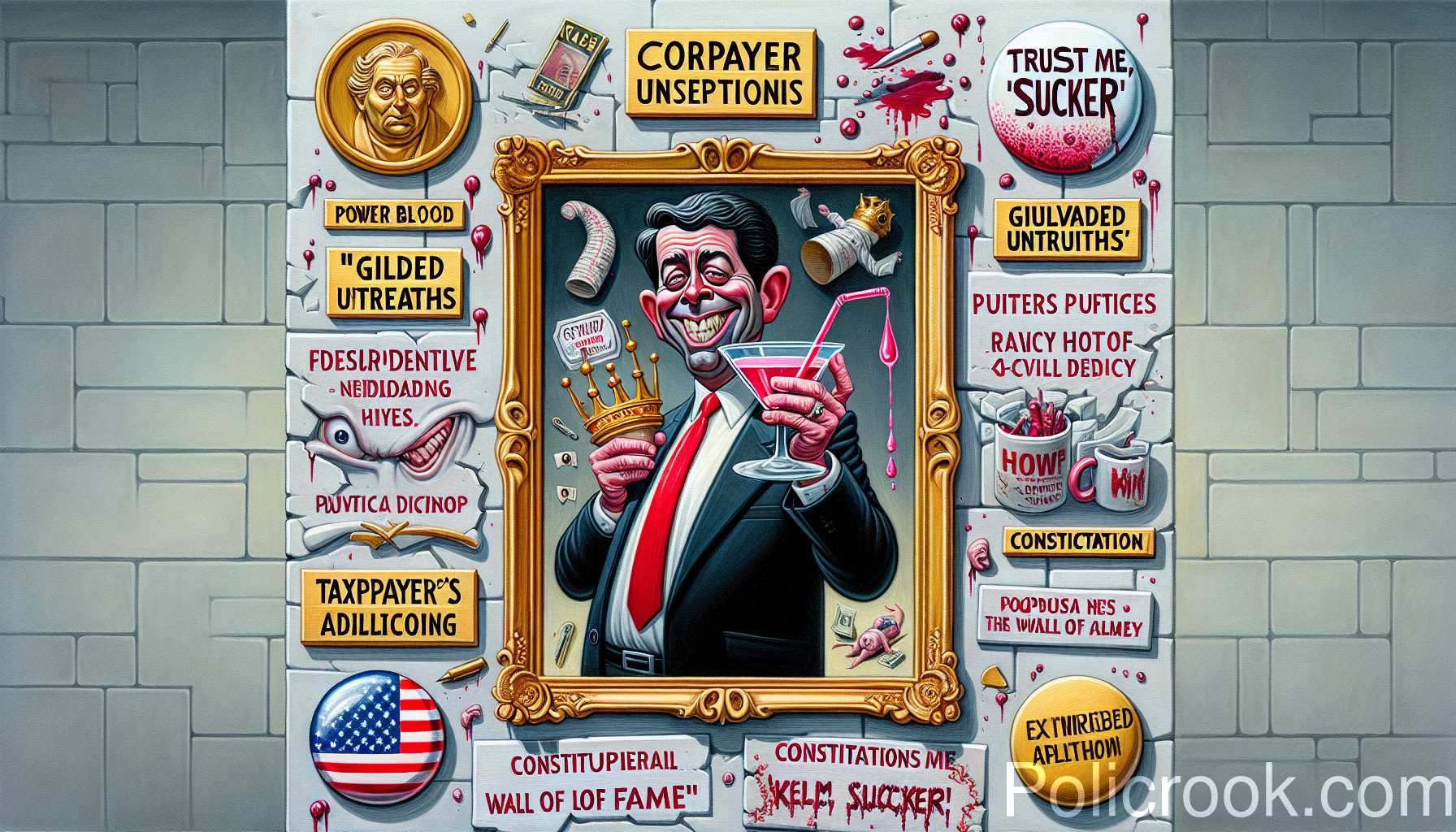
Laws Aren’t Made in
Parliament. They’re Made in Boardrooms.
Welcome to the carnival where checks and balances are mere trinkets in a puppet show for those in the backroom, where the scale of public service is tipped mercilessly in favor of those who can pay for it.
Politicians have elevated the selling of public policy to an art form, transforming laws into commodities fit for the highest bidder.
The ultimate irony?
The public thinks they’re buying democracy, while their elected officials market the very essence of their freedoms like rare vintage wines—prestigious, polished, and priced for the powerful.
First off, understand the game, my naive voter.
Your representative doesn’t serve you; they serve a cabal of corporate overlords cloaked in suits and dollar signs.
The ideas that trickle down from these boardrooms aren’t crafted for the good of the many; they’re tailored to fit the needs of those few lucky enough to afford the premium access.
“Public interest,” that seductive siren song, is wielded like a sword to justify policies that make fat cats fatter while leaving the rest of us to fight over the crumbs.
Need an example?
Watch as contentious tax hikes self-righteously brandished under the guise of “infrastructure improvements,” conveniently glossing over the fact that funds are siphoned straight into the pockets of cronies while potholes multiply like rabbits.
Ah, the glorified semantics of legalese.
Politicians don’t craft bills; they fashion elaborate traps with exquisite precision.
It’s like a gourmet chef creating a dish designed to look appetizing but is ultimately toxic.
They lure you in with phrases like “national interest” while hiding the poison behind the plate.
Each well-articulated line is a carefully wrapped gift hiding a bloody blade—a law that’s both a blessing and a curse, depending on whose interests it serves.
For every feigned nod toward aiding small businesses, rest assured it’s just a ploy to ensure the monopoly on the market remains snugly in the pockets of their handlers, cloaked beneath layers of bureaucratic red tape.
Now, let’s talk deals—the shadowy ballet that plays out behind polished wooden conference tables, where promises are exchanged like baseball cards.
The daylight holds no fear for our Machiavellian maestro; they thrive in the dark, making connections, trading favors, and orchestrating deals that would make a mobster blush.
Instead of public forums, the real discussions happen away from prying eyes, and the inherent secrecy plays perfectly into their hands.
As they flash their winning smiles at their constituents, they make a pact with the devil, exchanging their integrity for the allegiance of the powerful—and they’re not above leveraging narratives twisted by the very media that should hold them accountable.
For a spot in the limelight, simply drop some cash into the right hands, and watch as the narrative gets manipulated to ensure your shiny façade remains intact.
Scandal becomes spectacle, and accountability evaporates like mist on a hot summer day.
Let's not forget the regulatory labyrinth, another theater of exploitation.
Regulations are rarely about public good; they’re just a performance.
For their friends in corporate yachts, they’re mere suggestions drawn with a fine-tip marker.
A hefty lobbyist is worth their weight in gold, ensuring that small innovators are crushed while the big players prance about under the safety net of generous exemptions.
If you can’t crush competition outright, why not just layer on regulations that only the biggest corporations can navigate?
"Necessary for growth," they’ll claim, as if feeding on the remains of a small business is part of a divine plan for economic salvation.
Those who dare to think outside the box are trampled, leaving a homogenous market ripe for exploitation.
Finally, the pièce de résistance—using the public’s assets to perpetuate private wealth, all while trumpeting the victory of "public interest." Politicians will crow about "streamlining government" as they auction off your public resources, glorifying such transactions as strategic investments.
Euphemisms flow like champagne at a fundraiser organized by those very corporations you’re meant to regulate, glitz and glamour overshadowing the dark underbelly of collusion that is boundless and unapologetic.
So, here’s the lesson for you, the voter: If you don’t learn to spot this insidious con game, you’ll keep applauding your own exploitation.
This isn’t satire; this is the brutal reality of how politicians twist the nobility of public service into a grotesque parody of profit-driven exploitation.
Don’t be fooled into believing that every judge, prosecutor, or police chief is corrupt; many remain righteous amidst the corruption.
But watch closely as politicians wage a relentless war to replace integrity with loyalty to themselves.
Training your eye to see the shadows behind the smiles can empower you to recognize when a public servant is really just stacking their own deck.
Stay alert, question more, and remember: the next time a politician offers you a sweet deal wrapped in passionate rhetoric, it might just be them trying to sell your freedom for their next lavish gala.